
The world is experiencing a once-in-a-lifetime transformation in the flow of capital. Foreign direct investment (FDI), once driven primarily by cost optimization, is increasingly shaped by geopolitics, demographics, energy security, and policy uncertainty. The result: clear winners and losers are emerging in the global competition for capital.
A Century of Change in Global Trade
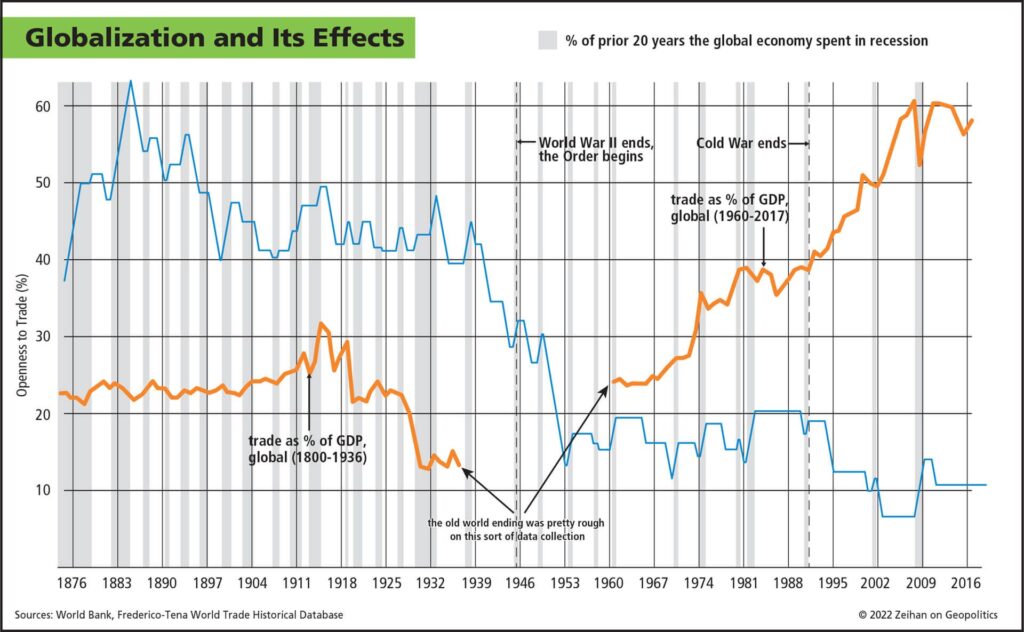
Globalization has never followed a straight line. In the early 20th century, global trade peaked just before World War I, only to collapse during decades of conflict and depression.
Zeihan on Geopolitics
The post–World War II order, anchored by the Bretton Woods Agreement, ushered in unprecedented growth. U.S. guarantees of security and market access, coupled with initiatives like the Marshall Plan, helped rebuild war-torn economies and laid the foundation for the prosperity that eventually lifted millions out of poverty.
Global poverty has fallen dramatically since World War II. Estimates suggest that roughly 58% of the world’s population lived in extreme poverty in 1950, compared to just over 8% in 2020. More recent World Bank data puts the figure at about 5.4% in 2024.
Yet the assumptions of the late 20th century, that geopolitics no longer mattered and that trade would only expand, have been shattered. Events from 9/11 to the 2008 financial crisis, the COVID-19 pandemic, and Russia’s invasion of Ukraine have reminded companies that risk is ever-present, and globalization is no longer inevitable.
The State of FDI Today
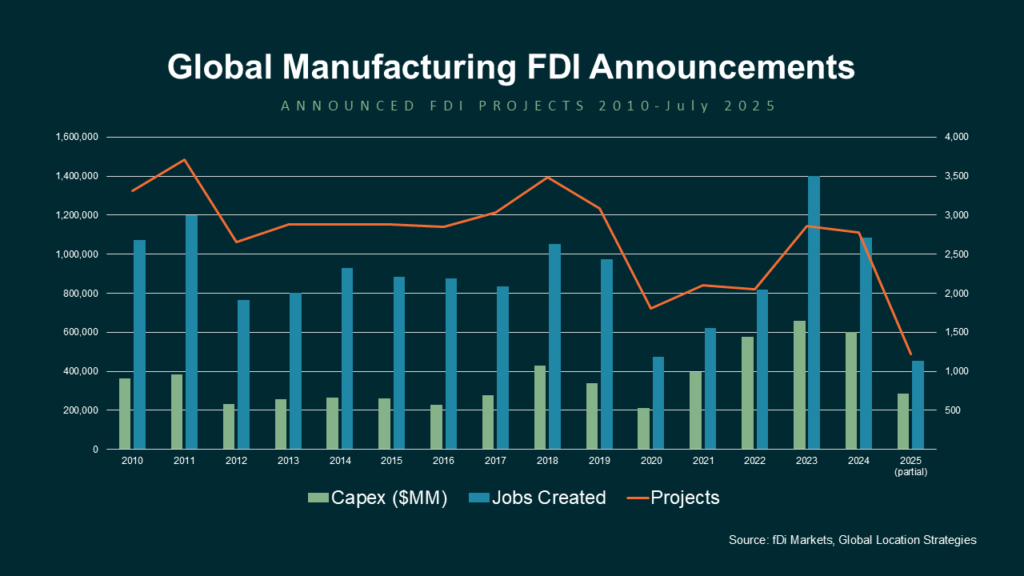
Global FDI announcements have trended upward over the last 15 years, but recent data shows momentum slowing. Based on current trajectories, 2025 is on pace to record more than 1,000 fewer announced projects than in 2024.
Source: fDi Markets, Global Location Strategies
Three powerful shifts stand out:
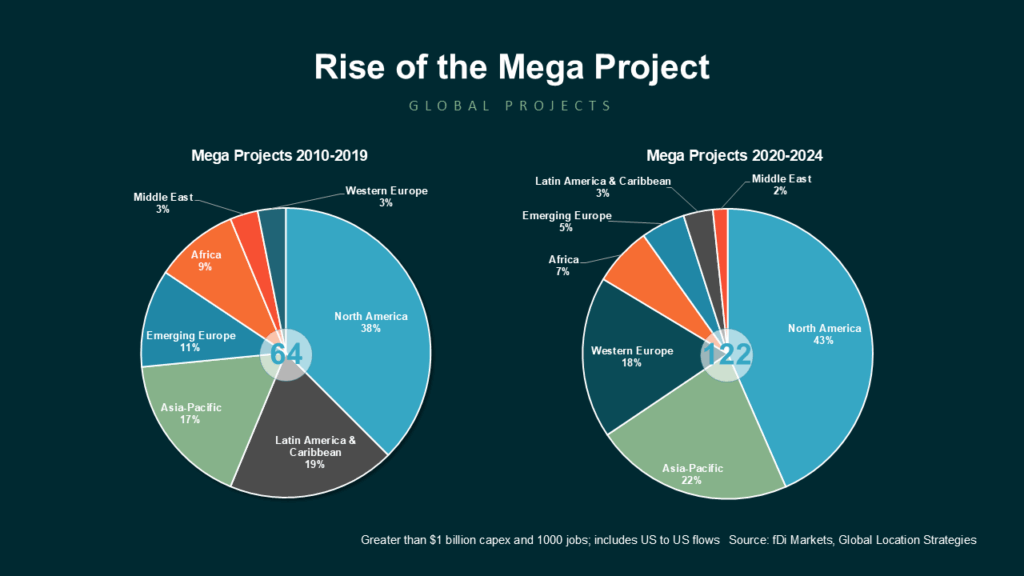
- Mega Projects on the Rise – Investments exceeding $1 billion and creating more than 1,000 jobs have doubled in just five years. From 2010–2019, 64 mega projects were announced globally; between 2020–2024, that number nearly doubled to 122. Nine mega projects have been announced so far in 2025, though this may signal a slowing momentum compared to prior years.
Source: fDi Markets, Global Location Strategies
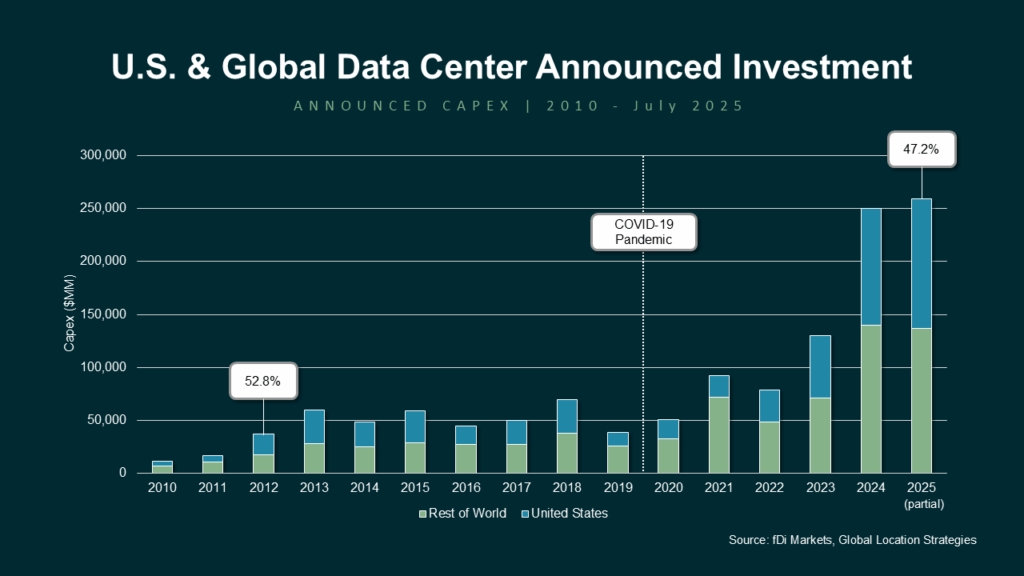
- Data Centers Demand – Data center projects are absorbing prime industrial sites and enormous amounts of energy. In 2025, announcements have already reached record highs, with the U.S. accounting for 53% of global investment. According to the Department of Energy, data centers are projected to consume 12% of U.S. electricity demand by 2028.
Source: fDi Markets, Global Location Strategies
- Reshoring Reshapes Supply Chain – The United States has reemerged as one of the most competitive locations for capital-intensive projects, thanks largely to the shale energy revolution. Rising labor costs in Asia and geopolitical risk are further accelerating reshoring decisions.
Uncertainty: The Enemy of Investment
While cost and quality remain critical, uncertainty has become the single greatest threat to investment. Companies can adapt to higher costs, but they hesitate to commit when future rules are unclear.
Recent FDI data illustrates this clearly:
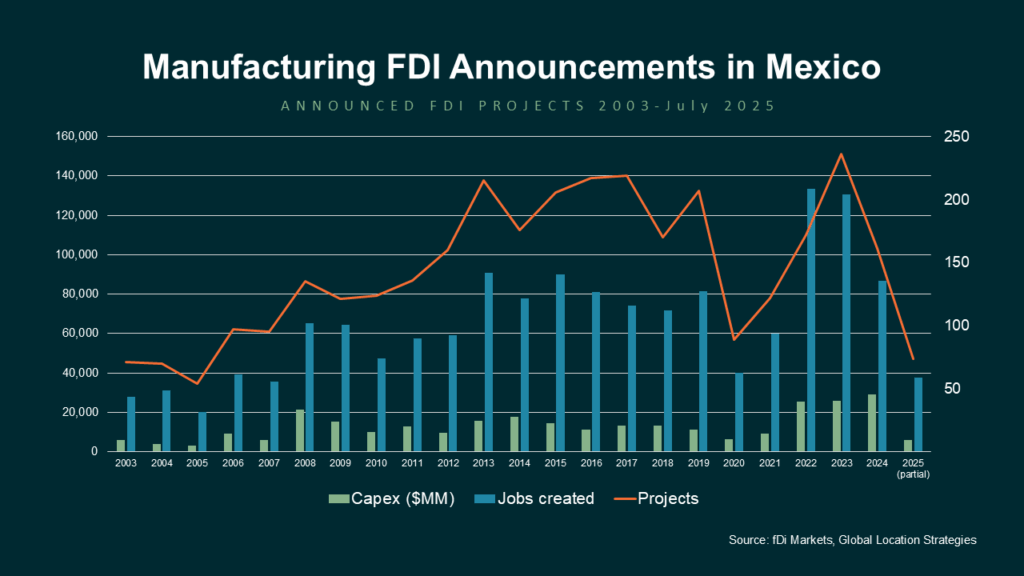
- Mexico: Manufacturing project announcements collapsed in 2024, and year-to-date figures for 2025 suggest an even weaker trend, reflecting concerns about regulatory instability.
Source: fDi Markets, Global Location Strategies
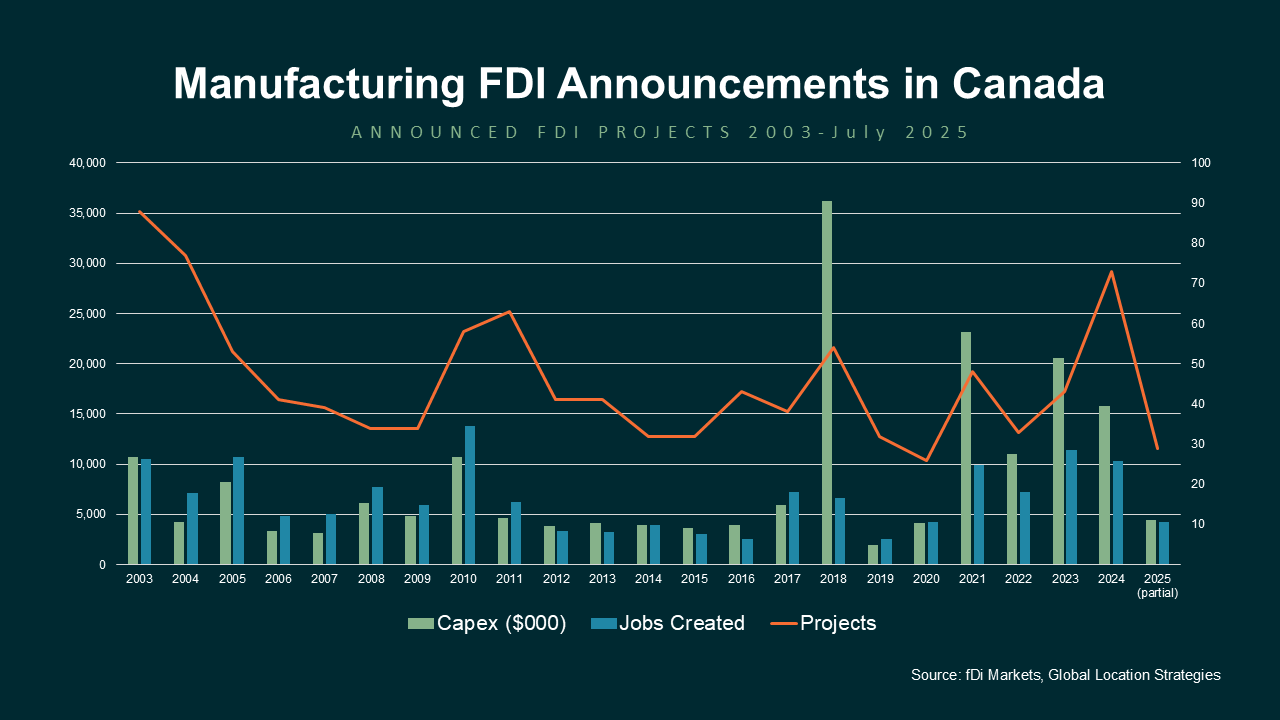
- Canada: Despite having some of the cheapest and cleanest electricity in the world, Canada’s manufacturing FDI announcements show a long-term slowdown in project activity, with only occasional surges in capital-intensive investment. Capex was relatively strong between 2021 and 2024, but early 2025 figures suggest a weaker outlook.
Source: fDi Markets, Global Location Strategies
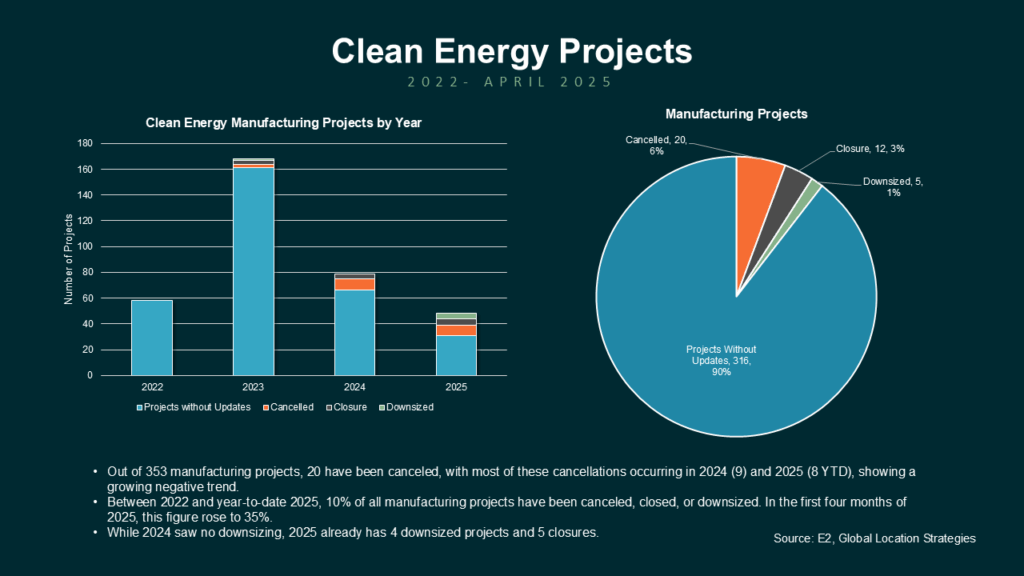
- Clean Energy: Of 353 U.S. manufacturing-related clean energy projects announced since 2022, more than 10% have already been canceled, downsized, or closed — with 2025 showing the sharpest drop-off.
Source: E2, Global Location Strategies
- Tariffs and Trade: Uncertainty over U.S.–China tariffs and shifting trade policies is weighing heavily on investor confidence.
Even the U.S., typically resilient to global shocks, has seen FDI announcements soften in 2025, reflecting how policy unpredictability can slow decisions at every level.
The New Investment Equation
In today’s environment, winning locations share four critical traits:
- Geography – Secure borders, favorable transport systems, and accessible markets.
- Geology – Abundant, reliable, and cost-competitive energy sources.
- Demography – A young, growing, and skilled workforce pipeline.
- Economy – Transparent, predictable frameworks that welcome and protect capital.
Capital will always flow where it is treated best and where it can grow. For companies evaluating expansion, the most important questions are no longer just about cost, but about long-term resilience:
- Will the workforce be there in 20 years?
- Is the energy supply reliable and sustainable?
- Are political and financial systems stable enough to support growth?
Those who invest wisely in this new geography will be positioned to thrive in the decades ahead.